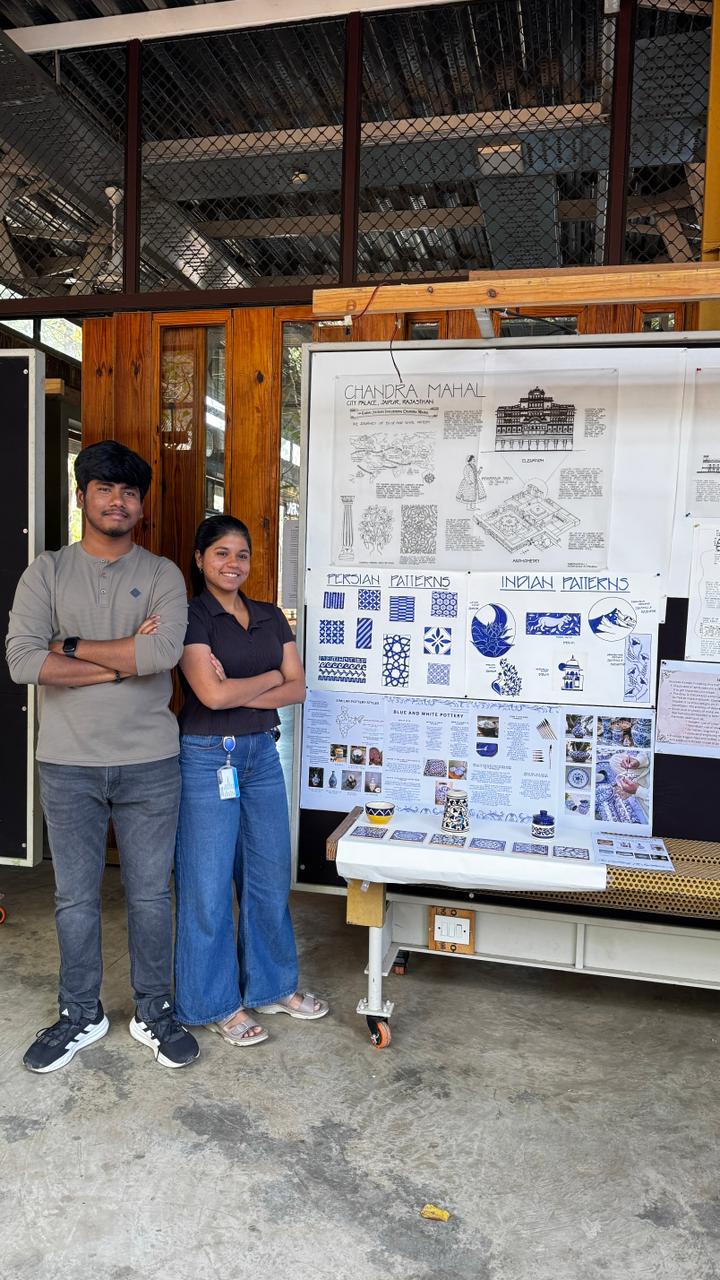
Picture 1: Niranjani and Narendran in front of their Panel.
Persian blue-and-white pottery reached India through trade and migrating artisans during the early Mughal period. Local production developed under the Mughals when Emperor Akbar invited Persian potters to royal karkhanas and encouraged the use of local materials such as earthenware and quartz with tin glazing and low-temperature firing. Designs gradually shifted from Persian styles to Indian floral motifs. Under Jahangir and Shah Jahan, the craft was refined and widely used in architectural decorations on walls and tiles.
The tradition later reached Jaipur through Rajasthani artisans trained in Mughal courts. Sawai Jai Singh II supported these artisans by providing food and accommodation, asking them in return to teach and practice the craft, which led to the development of Jaipur blue pottery as a distinct decorative tradition.
Blue-and-white pottery reached Persia from China mainly through the Silk Road trade routes and later through maritime trade across the Indian Ocean. During the Yuan and Ming periods, Chinese blue-and-white porcelain was exported as luxury goods and diplomatic gifts. Persian merchants and rulers highly admired these ceramics, which inspired local potters to imitate their style using available materials.
But Persian potters did not have access to kaolin clay used in Chinese porcelain, so they used fritware, made from quartz powder, crushed glass, and a small amount of clay. To create a white surface, they applied tin-opacified glaze, and the blue designs were painted using cobalt oxide.
Jaipur blue-and-white pottery is an example of cultural diffusion because it grew through the natural movement of ideas, skills, and artisans from one region to another. The technique began in China, was reshaped in Persia, and later reached India through Mughal and Rajasthani craftsmen. In Jaipur, these influences were adapted to local materials, designs, and preferences with royal support, creating a unique art form that reflects the blending of multiple cultures.
The aim is to study the influence of Chandra Mahal in City Palace, Jaipur on the development of Jaipur’s blue and white pottery with reference to royal patronage, shared aesthetics and persian design influence.
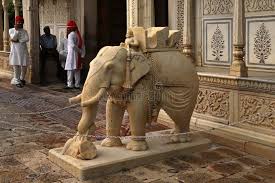
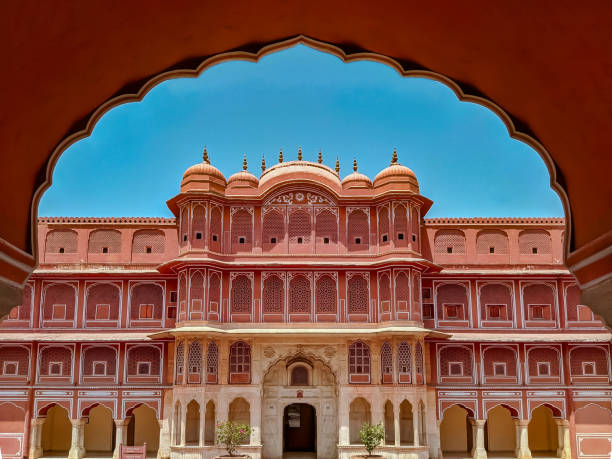
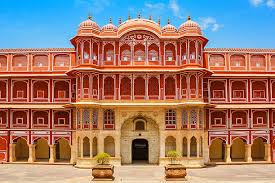
Maharaja Sawai Jai Singh II (r. 1699–1743) commissioned the construction of the Jaipur City Palace, including Chandra Mahal, soon after founding Jaipur in 1727. He selected the site at the centre of the planned city and established the palace as the seat of governance, royal residence, and ceremonial core.
Through sustained royal patronage, he employed craftsmen for stone carving, ceramic work, stucco work, mirror decoration, and painting, shaping the City Palace into a lasting architectural and cultural landmark of Jaipur.
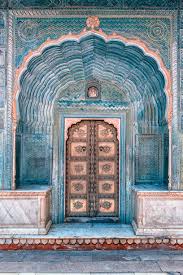
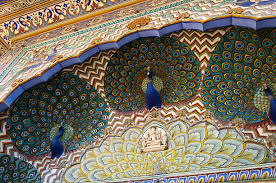
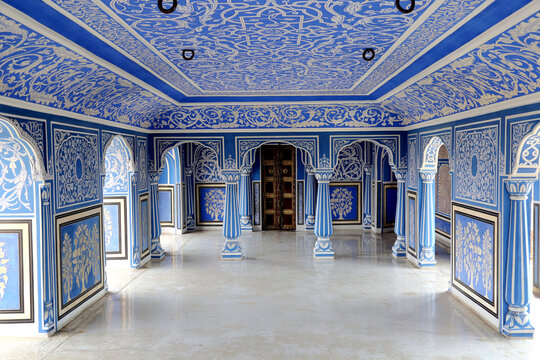
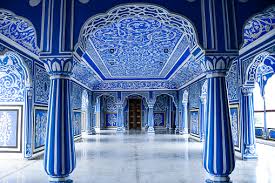
The opulence and grandeur of Chandra Mahal are breathtaking. It symbolises the Rajput and Mughal grilled patterns and showcases spacious floors, rooms, pavilions, and an open dome. Sukh Niwas (house of pleasure) is on the first two levels, followed by the Rang Mahal (also known as Shobha Niwas) with its coloured glasswork, and finally, the Chhavi Niwas with its gorgeous blue and white decor.